- My Journey to Teaching
- Why yoga?
- Why yoga for grief?
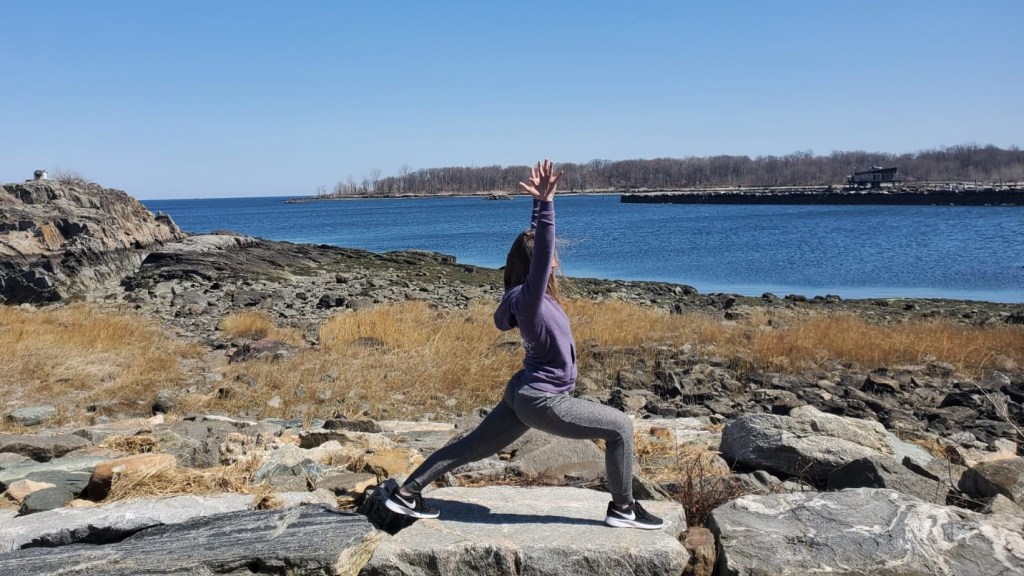
My Journey to Teaching
I came to yoga slowly over the years. I first practiced at home with a DVD and I noticed a small, simple change in my posture. When I started attending classes in person, I fell in love. I felt better mentally, physically, emotionally. My confidence increased, I felt better able to handle tough situations, and physical ailments (i.e., headaches) seemed to decrease when I practiced yoga.
Over the years many people have encouraged me to become a yoga teacher. Being a shy, introverted, hate-to-be-the-center-of-attention type of person, I always rejected the idea. I enjoyed going into a class, letting someone else take the reins and just flowing with my body and breath. But one day something changed. Feeling burnt out in my career, it was once again suggested to me that I do a teacher training. And this time, it landed differently. I was not PSYCHED about it, but I wasn’t so closed off to the idea anymore. So, I did a little research – just to see…what types of trainings were in my area, what the cost and time commitment would be, is this right for me right now? Next thing I knew I was meeting Betsy Kase, the owner of Yoga Haven in Scarsdale, NY, and quitting my job to do a yoga teacher training… What?
It was scary and exciting. And with every step of my journey into and through the training, I had multiple signs shown to me that this is the right path and that I am in the right place. Reinforced over and over throughout the year-plus (thanks, Covid) of training. I am so thankful for the experience, and I have grown so much through it.
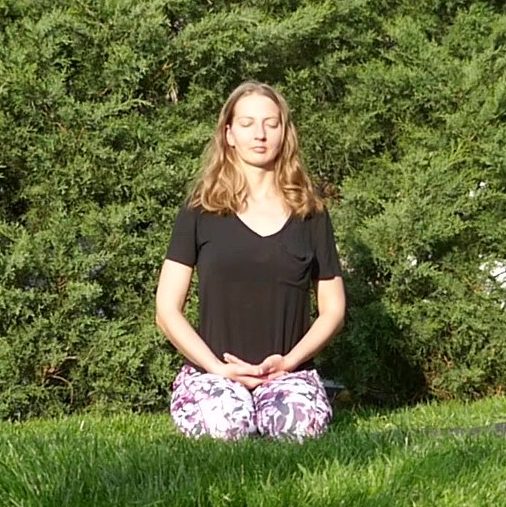
Why Yoga?
A quick internet search of “the benefits of yoga” will explain what the physical practice of yoga can do for your body and mind. What most people do not realize, however, is that the physical practice (the poses, also called asanas) is only one part of yoga as a whole. (Yoga is made up of an 8-limbed path.)
Some of the benefits from yoga asana practice are as follows:
- Increased strength, balance & flexibility
- Improved posture & circulation
- Better joint mobility
- Activation of the relaxation response (parasympathetic nervous system)
- Less stiffness in the body
- Improved self- and emotional- regulation (often called “stress reduction” but I do not believe that yoga decreases your stress. I believe it offers you the tools to better handle stress.)
- Increased lung capacity and better breathing
- A better connection to your body and your mind
- A sense of community
There are many reasons that I came to yoga… and continued to come back to yoga… and now teach yoga. I found the benefits listed above to be true. In addition to those, I have seen some other personal improvements.
- I am a long-time sufferer of headaches and migraines. Yoga often (not always) reduces my headaches.
- I have scoliosis in my spine, and while I don’t necessarily have any blatant issues from the scoliosis, I do find that my spine often feels compressed. I believe that sometimes this compression actually causes my headaches. Practicing asana to lengthen out and lubricate my spine makes a big difference.
- Yoga helps me to become more aware of what is going on in my body.
- Yoga allows me to slow down, connect with my breath and get out of my head.
- I become more mindful, kind (to others and to myself) and grateful when I consistently practice.
- Along with the kindness to myself, I have also become more accepting of myself, my shortcomings, etc. This has increased my confidence.
- When I am having a hard day, yoga helps me connect to my body, break away from my thoughts and process my emotions.
There are many more benefits once you dive deeper into the other 7 limbs of yoga (which I highly recommend and will walk you through on the blog). Before Yoga Teacher Training, I had no idea there was more to yoga than the physical practice, but I still felt all the benefits.
Teaching yoga allows me to share the knowledge of all that I learned in training. It allows me to help others come home to themselves, slow down, and have greater acceptance for themselves and others. I want to spread the good feelings and changes that I, and many others, experience through yoga.
One of my main goals in teaching is to allow for a space of healing – whether that be physical or emotional, big, or small things. This is why I also did a training for Yoga for Grief. Yoga has helped me cope with my own grief. Creating a space where others can find ways to manage and cope with their grief is important to me.
I want to share the notion that a yoga class is not your typical “exercise” class, where you do what you are told, you push yourself maybe further than you should. In yoga, it is different – or at least it should be. (Not all yoga teachers come from this perspective.) It is my belief that a yoga class is a space where YOU, the student, is in charge of you. The teacher is only a guide. You have the autonomy to say, “yes this is right for me and my body today,” or not. You have the choice to push yourself, or not. You know your body best. You know what feels right and what feels wrong. Listening to what your body is telling you is important. This is something I feel is left out of most yoga classes.
Lastly, when I tell people that I am a yoga teacher, the response I hear most often is that they “can’t” do yoga, they’re not flexible enough, and that they’re not “good” at it. Yoga is for everyone. I know on social media and yoga magazines and websites, most of what you see are these elaborate poses with these flexible humans. I want to break these preconceptions. I want to breed inclusivity with yoga. Yoga is for EVERY human body. There are so many variations of so many poses to fit literally any and everyone’s bodies. And that is what I’m here to share with you!
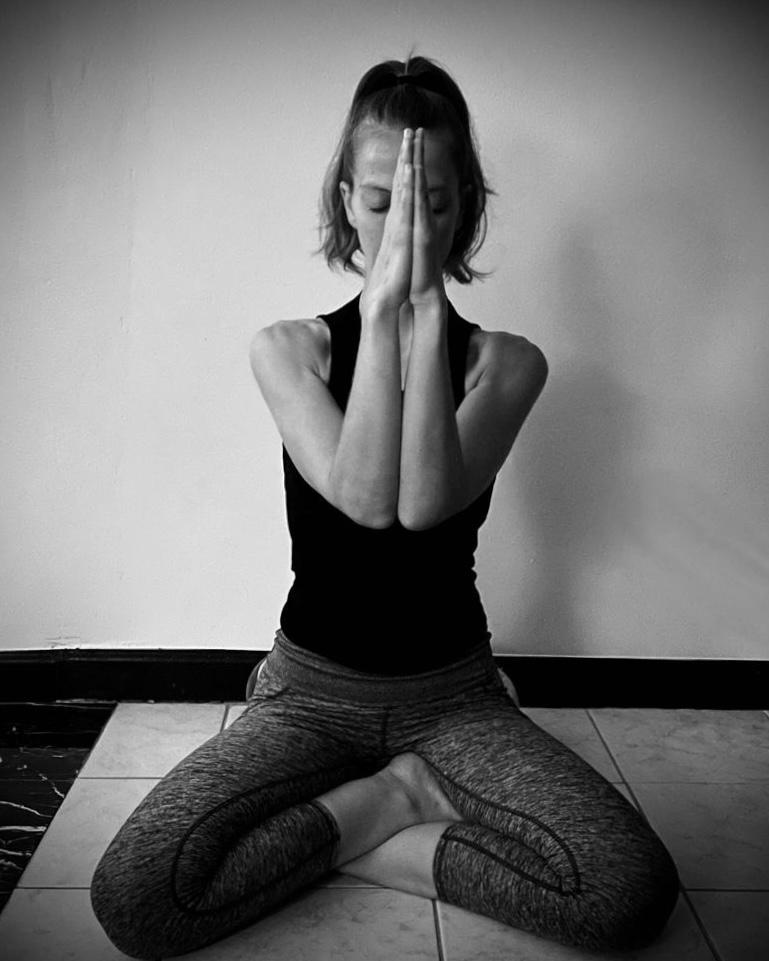
Why Yoga for Grief?
What is grief?
Grief is a normal and natural human response to loss. Grief is most closely aligned with the death of a loved one. However, loss of any kind – a relationship, a job, a home, etc. – can bring about a reaction of grief. Everyone’s experience of grief may be different. Just as each of us are unique, each experience of loss is unique. There is no timetable or “end date” for grief. You may feel the effect of what you’ve lost for a very long time.
Our society is not built with this extended timetable in mind. We are given a short amount of time to grieve – X amount of days off, X amount of time before people stop checking in. Some may expect you to be “over” your grief after a certain amount of time, but that is not how grief works. Grief isn’t a predictable process, and we often need support beyond the expected mourning period.
How can yoga help?
Emotions occur as a response to something we experience. That emotion, that reaction, can stir up a lot of energy within the body – physically within the muscles and organs. When we are faced with significant loss, especially those that we have no control over, a lot of energy is mobilized. When energy is mobilized without an outlet, it can tend to get stuck within the body. This is where movement and yoga can help.
The body uses movement to discharge energy. Trembling, shaking, and crying are all ways that this occurs. Recruiting strength through yoga poses and then offering moments of rest help our bodies discharge energy. This allows our nervous systems to regulate, using ourselves as a resource to move energy and come back to the present moment. We often try to “hold it together” when we feel it wouldn’t be appropriate to fall apart. When we actively hold our emotions in, the energy it takes to do that can exhaust our nervous system. “Feel it to heal it” – while the pain and sadness may not “heal,” allowing yourself to fully experience what you are feeling will help it to move through you.
When practicing yoga for grief, we begin to move the energy that may be stuck in the body. As that energy moves, we continuously bring ourselves back to the present moment, as a reminder that right here, right now, we are okay – even if it sometimes does not look or feel that way.
 Raising LeBar